Trade Mark Law
What is a trade mark:
“products are made in the factory but brands are made in the mind”
Walter Landor- Brand design legend, and founder of Landor Associates
It was once famously said that products are made in the factory but brands are made in the mind. In practise, this is very true. A brand injects identity and personality into your product or service.
In today’s market, the brand name can be a major differentiating factor between competing products and also protects your goodwill and reputation. A trade mark is essentially a “sign” that distinguishes your goods or services from those of other traders. It acts as a “badge of origin” or “badge of quality”.
When consumers see a particular trade mark they can assume that it comes from a particular source or quality and this can influence them to buy the product or use the service.
The laws in Australia allow you to protect your distinctive brands as trade marks.
This way you can prevent consumer confusion and your valuable goodwill and reputation.
“trade marks assist customers to identify with your goods and services. They allow you to maintain your goodwill and reputation improving your bottom line”
Benefits of trade mark registration
A trade mark registration essentially gives you the exclusive right to use the marks or marks in Australia for the goods or services for which you have registered it (subject to some exceptions such as someone else having had honest concurrent or prior continuous use).
Once your trade mark becomes registered, you can ward off others from copying it by using the well known “®” symbol to show other traders your company owns the trade mark(s). Other benefits include:
- A trade mark is a valuable asset that can be licensed to others and sold;
- If another person infringes your trade mark then having a trade mark registration makes it much easier to enforce your rights against them;
- Unlike a business name registration, registered trade mark rights are Australia-wide; and
- A trade mark registration can be renewed every ten years so is potentially perpetual.
Legally speaking, what makes a strong trade mark?
A trade mark can be a letter, number, word, phrase, sound, smell, shape, logo, picture, aspect of packaging or any combination of these.
Trade marks that can be very difficult to register include:
- Descriptive words - for example, trade marks that say something about the quality, quantity, purpose, value or geographical origin of the goods or services. The reason for this is that other traders might have a genuine need to use these words. Examples are the words: classic, less, budget, Victorian and health
- Suggestive marks that merely suggest some quality or characteristic of the services
- Common surnames and common symbols
- Generic words
- Common industry terms or colours
Examples of strong well known registered trade marks:
Invented words such as arbitrary or fanciful terms are a good start if you are developing a new trade mark and want to enhance your chances of registration as it is less likely that someone else might have them registered.
The more unusual and original the mark is, generally speaking the more distinctive it will be. Examples of well known distinctive that are registered in Australia include:
Words: Kodak, Vegemite, Solo, Prima, Twisties, Qantas, Berlei, Rexona, Pamolive, Bonds, Adidas, Sunsilk, Visa and Huggies
Logos: the Coca-Cola logo, the Nike swish tick and, of course, the “Golden Arches” McDonalds restaurant chain M which stands out
Colours: the colour orange for Veuve Clicquot sparkling wine and for telecommunications services. Cadbury has been trying to protect its special shade of purple that it uses for packaging for chocolate in Australia as a trade mark.
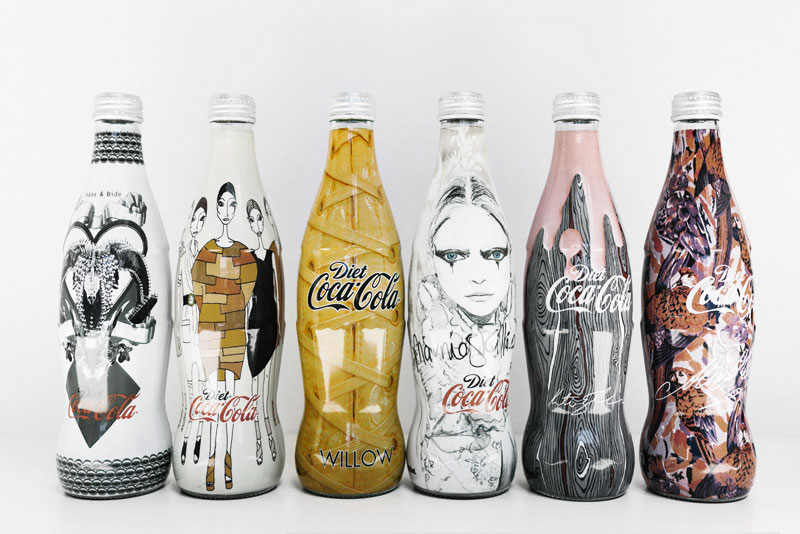
Shapes: The prism shape of Toberlone chocolate and the shape of the curvaceous Coca-Cola bottle
Sounds: various advertising jingles
Taglines and slogans: Moments like these, Oh What a Feeling and Make it a Blockbuster Night are good examples
Aspects of packaging: The Toberlone triangular chocolate packaging, the blue Tiffany’s box and, a company has even registered the red wax tip of their bananas! (see picture below)
Restaurant fit out: Eagle Boys Pizza have registered the 'pink glow' for its restaurant lighting (described as “a pink glow created by a row of pink coloured lights extending along a fascia of a building or a pink glow created by pink coloured lights mounted on the exterior or interior walls of a building”)
Other novel trade mark registrations
the red stripe applied to the applied to the heel of a shoe registered by Prada since 2001
Surnames
Surnames can usually be registered as trade marks if they are not too common. This will largely depend on how many times the surname appears on the Australian electoral role or whether the surname has been used extensively over time. Examples of surnames registered in Australia are:
- Cadbury (for chocolate)
- Heinz (for soup)
- Smiths (for potato crisps)
- Kellogg (for breakfast cereal)
- Cristina Re (for stationery)
English words
Ordinary English words might also be capable of registration so long as they are not descriptive of the goods or services. Examples of registered marks in this category are:
- PICNIC (for chocolate bars)
- SOLO (for soft drink)
- SHELL (for petrol)
- APPLE (for computers)
- ROSELLA (for foodstuffs)
- FLAG (for accommodation services)
Consumers know to look for the red wax tip if they want to buy environmentally friendly Red Tip Eco Banana from North Queensland, Australia.
The trade mark registration process
Trade mark registration does not happen overnight. In fact, it takes at least 7 months before a trade mark application can be accepted in Australia. Once it is accepted by it is advertised as accepted and any person can oppose the mark during the three month “opposition period”. The grounds on which someone might oppose include:
- That the trade mark is not being used as a trade mark
- The mark is not distinctive
- The mark is scandalous
- The mark infringes someone’s copyright
- The mark is likely to deceive or cause confusion amongst the public
- The mark is too similar to another existing or pending trade mark registration
Examples:
McDonalds takes on McChina
Back in 2004, fast food chain, McDonalds Corporation, opposed registration of the mark McChina for restaurant services for Chinese food which the applicant (Lubowski) tried to register as a trade mark. One of the grounds was that the use of the mark McChina would be misleading, especially since McDonalds was in the practise of inventing trade marks for food and beverages services with the prefix “Mc” (examples are McFlurry, McChicken, McMuffin, McWraps, McChiller and McDippers to name a few). Given this, and that McDonalds had a history of extending it menu to ethnic style foods, the Registrar decided that the McChina mark could not be registered and McDonalds succeeded in its opposition.
Coca Cola takes on Sola Cola
In 1999 The Coca-Cola Company opposed the registration of the mark Sola Cola on the grounds that they were too similar to its trade marks Coca Cola and SOLO, which were registerd for similar goods. The Registrar agreed and the opposition was successful.
What does it mean to use something as a trade mark?
It is one thing to use a particular word or logo, but before considering trade mark registration it is important to ensure that you are using the word as a trade mark. This means that you are using it as a brand to show consumers that the goods are services are yours and not as, for example, a descriptor or something else.
Examples:
Kettle Cooked Chips
In 1996, The Kettle Chip Co was unsuccessful in suing another company for using the term “kettle cooked”. Even though The Kettle Chip Co owned the trade mark KETTLE for potato chips, the judge took the view that when the other company they sued used the phrase “THINS - Double Crunch Kettle Cooked Potato Chips”, they were not using it to describe where the chips were from (ie as a brand) but rather to describe the process in which the chips were cook. The Kettle Chip Co lost the case.
Vintage Cheese
In contrast to this case above, 1998, a New Zealand court had to decide whether Bonlac foods infringed Mainland Products’ trade mark for the words VINTAGE for cheese on its BEGA cheese products. The court took the view that VINTAGE was not a descriptive term as its normal meaning does not describe any characteristic of the cheese (compare to tasty or mild, and compare to wine where the word VINTAGE does have a particular meaning). Mainland’s opposition was therefore successful.
Searches are important
When you choose a new trade mark you should always ensure that you obtain search of the trade marks office database and other goods and services existing in the market place to ensure that you won’t be infringing any existing trade marks.
Trade mark services we provide:
- Trade mark and brand protection including overseas
- Conducting thorough trade mark and marketplace searches
- Training your in-house marketing staff in relation to what makes a strong brand and what types of new brands they should steer away from
- Developing trade mark usage guidelines for your trade marks to ensure consistency of use by staff within your business and external contractors such as graphic design agencies and printers.
- Ensuring that you display proper symbols in conjunction with your trade marks
- Considering overseas protection as and when relevant
International Trade Mark Protection
If you export your goods or services internationally or are planning to do any form of business overseas you should consider registering your trade marks overseas, including filings under the Madrid Protocol, an international treaty allowing an Australian Trade Mark owner to register in over sixty countries which are part of the Protocol.
We can also file trade marks for overseas companies.
|